
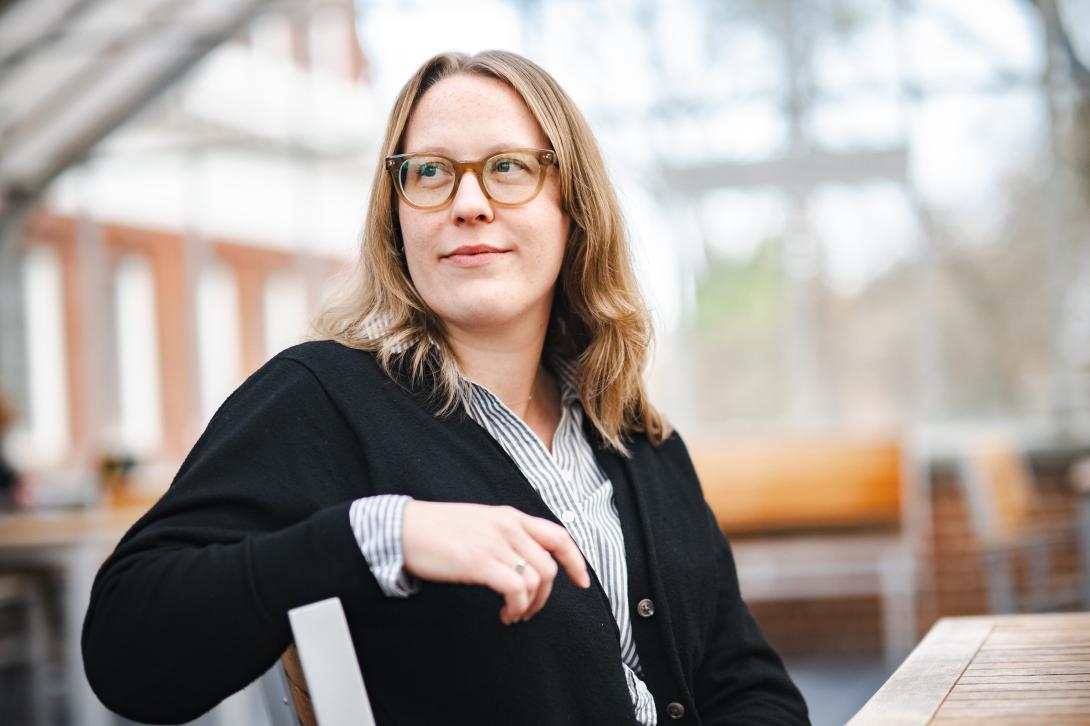
In an era of unprecedented mental health awareness, social scientists are turning to computational methods to understand how Americans conceptualize psychological well-being. In her forthcoming book, sociologist Amy Johnson examines four decades of mental health conversation and challenges a fundamental assumption that increased dialogue about mental health reduces stigma.
Working at the intersection of cultural sociology and data science, she has spent years analyzing millions of texts, from newspaper archives spanning 1980 to 2020 to five years of daily posts from Reddit's r/mentalhealth forum. Her research reveals a more complex picture than the prevailing narrative of progress suggests.
"Language is our window into culture, especially language that's preserved historically," says Johnson, assistant professor of sociology in the Department of Sociology and Anthropology. "Reading it, looking at it, analyzing it tells us how culture and cultural ideas change."
Her investigation began with a straightforward question: What do ordinary people, not mental health professionals, think about mental health? While surveys and quantified measures of public opinion exist, Johnson sought something deeper. "To really get at culture, I had to go to text data," she notes.
She started with news media, pulling articles from six major publications through ProQuest, a comprehensive database of periodicals. Her search parameters were deliberately broad: articles either explicitly mentioning mental health and illness or tagged as related to these topics. The resulting dataset provided insight into dominant cultural narratives, the widely shared ideas that news media typically report. But newspaper coverage left a critical question unanswered — how do individuals apply these macro-level cultural concepts to their own experiences? This question led Johnson to Reddit.
Spotlight Recipient

Amy Johnson
Assistant Professor